Where the noise actually gets in
Two things let street noise into a room: the gaps around a poorly fitting window, and thin single glazing that the sound passes straight through. An old sash tends to have both, which is why a Victorian front room on a main road can be so loud.
So a quieter window works on both fronts. It closes the gaps with a tight seal, and it replaces the thin pane with glass chosen to slow the sound down.
Acoustic and laminated glass
Toughened glass is fitted to both sashes as standard, and for noise there are acoustic and laminated options beyond that. Laminated glass carries an interlayer bonded between two panes, and that interlayer damps the vibration that sound travels as, so less of it reaches the room. An acoustic specification is built around the same idea, tuned for noise rather than security.
The right glass depends on the road. A quiet residential street and a bus route are different problems, so the specification is matched to what you are actually living with rather than fitted as a blanket upgrade.
The seal matters as much as the glass
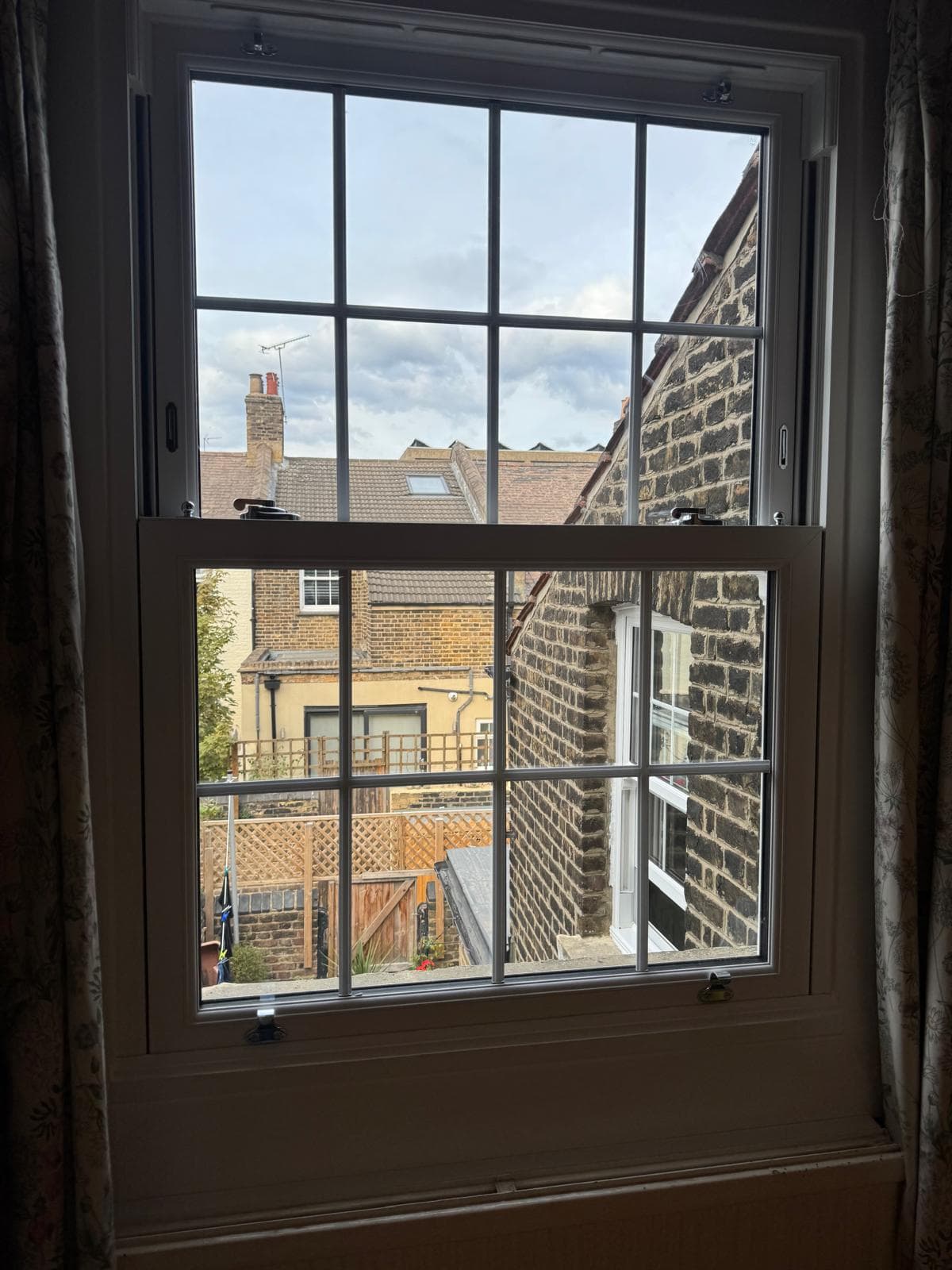
Better glass in a leaky frame only gets you so far, because sound follows the same gaps that draughts do. This is where a made-to-measure sash earns its place: it is built to the opening with no packers and no gaps, the weather bar is joined into the bottom sash, and air permeability is tested to Class 4 at 600 Pa, the tightest class in the standard.
That tight seal is doing quiet, unglamorous work against noise as well as weather, and it is the half of the job a glass upgrade alone cannot do.
Ask for the acoustic or laminated option and a tight-sealing frame together. One without the other leaves the easiest path for the noise still open.
What to tell us
When you enquire, say what the noise is and which rooms matter most: a main road, a railway, a flight path, a busy junction. That tells us whether a laminated or a full acoustic specification is the sensible one, and on which elevations it is worth the spend.
Across West London and the Home Counties we survey before anything is ordered. Anywhere else in Great Britain the windows are made to your schedule of sizes and delivered kerbside.
Questions we get asked
Do uPVC sash windows reduce noise?
Yes, in two ways. A tight-sealing made-to-measure frame closes the gaps that sound leaks through, and acoustic or laminated glass slows the sound passing through the pane.
What is acoustic laminated glass?
It is glass with a bonded interlayer between two panes that damps the vibration sound travels as, so less noise reaches the room. It is an option beyond the toughened glass fitted as standard.
Does double glazing block traffic noise?
Standard double glazing helps against everyday noise, but for a busy road a laminated or acoustic specification does considerably more, and only if the frame around it seals tightly.
Which glass is best for a busy road?
A laminated or acoustic specification, matched to the noise you have. Tell us whether it is a main road, railway or junction and which rooms matter, and the glass is specified to suit.
Read next
Talk to us about your windows
Send a photograph of the front of the property and roughly how many windows are involved, or your schedule of sizes for a supply-only order, and we will tell you what is realistic before anyone comes out.
Call 0800 861 1450, message us on WhatsApp, or email info@sashwindowfactory.co.uk.