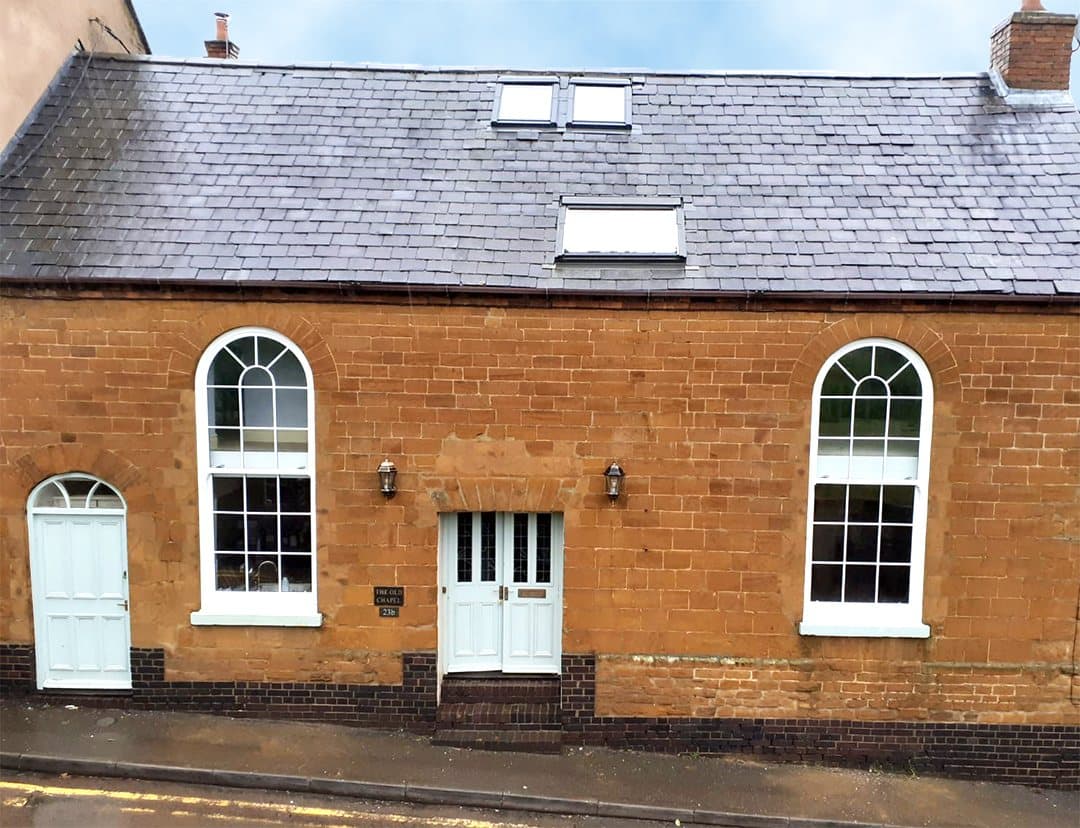
Two different things people confuse
A conservation area and a listed building are not the same, and the difference decides how much freedom you have.
A conservation area protects the character of a place. Replacement windows on an unlisted house inside one are often permitted, though the council may have removed permitted development rights through what is called an Article 4 direction, in which case you need permission for changes that would normally be automatic.
A listed building protects the building itself, inside and out. Changing the windows needs listed building consent, and that consent is a legal requirement rather than a formality. The two can overlap: a listed building inside a conservation area is governed by both.
Only your local authority can tell you which of these applies to your address. They hold the conservation area boundaries and the listing record, and it takes one enquiry to find out.
What a conservation officer is actually looking at
Officers are not usually hostile to replacement. They are protecting the appearance of a street, and their objections tend to cluster around the same handful of things.
In practice, the recurring points are:
- Whether the original pane divisions are kept. A window that was divided and comes back as a single sheet of glass changes the elevation more than anything else on this list.
- How thick the frames look. Sightlines that are visibly heavier than the originals flatten the front of a building, particularly on a Georgian frontage where the whole effect depends on a regular grid.
- The colour. A shade that suits the street matters more than a shade that suits a brochure. Any classic RAL colour can be sprayed and Farrow & Ball colours matched, and the inside and outside do not have to agree.
- Whether the window still reads as a sliding sash. Opening style is part of the character of a period street, and a sash that has quietly become something else tends to be noticed.
- Consistency along a terrace. On a continuous run, an officer is thinking about the whole row rather than one house.
The order that saves money
The expensive mistake is to specify and price a window, get attached to it, and only then discover the council will not accept it. Doing it the other way round costs nothing.
- Establish the status of your address with the local authority. Conservation area, Article 4, listed, or none of those.
- Ask what they will accept in principle on windows. Many authorities publish guidance, and where they do it is usually specific about glazing bars and materials.
- Then specify to that. Glazing bar layout, bar type, sightlines, finish and colour are all set per order, so a specification can be written to match what has been agreed.
- Keep the written quotation. It sets out the colour, glass, hardware and glazing bar layout in full, and it is usually the document an officer or a committee wants to see.
Shaped openings and awkward buildings
Older frontages rarely oblige. Heads are not always straight, openings are rarely square, and on a building where a Georgian front was applied to an older structure the elevation can look regular while the openings behind it are not.
Shaped frames are available including Gothic, swept head and true arch, made to the profile measured on site, and bay windows in both splay and box forms. On a fitted order every opening is measured individually rather than taken from a schedule, which is what allows a frame to fill an opening rather than be packed into it.
What we can and cannot help with
We can build to whatever your authority will accept, and we will say early if something in a specification is not achievable. Planning advice itself sits with the council and with your own agent if you use one, and their decision is the one that counts.
Much of our installation catchment is Victorian and Edwardian and a good part of it sits inside a conservation area, so tell us at survey that the property is affected and the specification will be written around it.
Questions we get asked
Do I need planning permission to replace sash windows?
For most unlisted houses, replacement windows do not need planning permission. A listed building needs listed building consent, and a conservation area with an Article 4 direction can remove the permitted development rights that would otherwise apply. The local authority holds the answer for your specific address and it is worth asking before you order.
What is an Article 4 direction?
It is a direction that removes permitted development rights in a defined area, so changes that would normally be automatic need permission instead. Councils use them in conservation areas where the character of the street depends on details like windows and doors. Whether one covers your address is a question for the council.
Can you supply to a specification the council has already agreed?
Yes. Send the agreed specification with your sizes and the windows are built to it, covering glazing bar layout, bar type, sightlines, colour and hardware. Where something specified is not achievable we will say so before the order rather than substituting quietly.
Read next
- Do uPVC sash windows suit a period property?
- Scheduling a supply-only order
- Survey, supply and fitting
Talk to us about your windows
Send a photograph of the front of the property and roughly how many windows are involved, or your schedule of sizes for a supply-only order, and we will tell you what is realistic before anyone comes out.
Call 0800 861 1450, message us on WhatsApp, or email info@sashwindowfactory.co.uk.