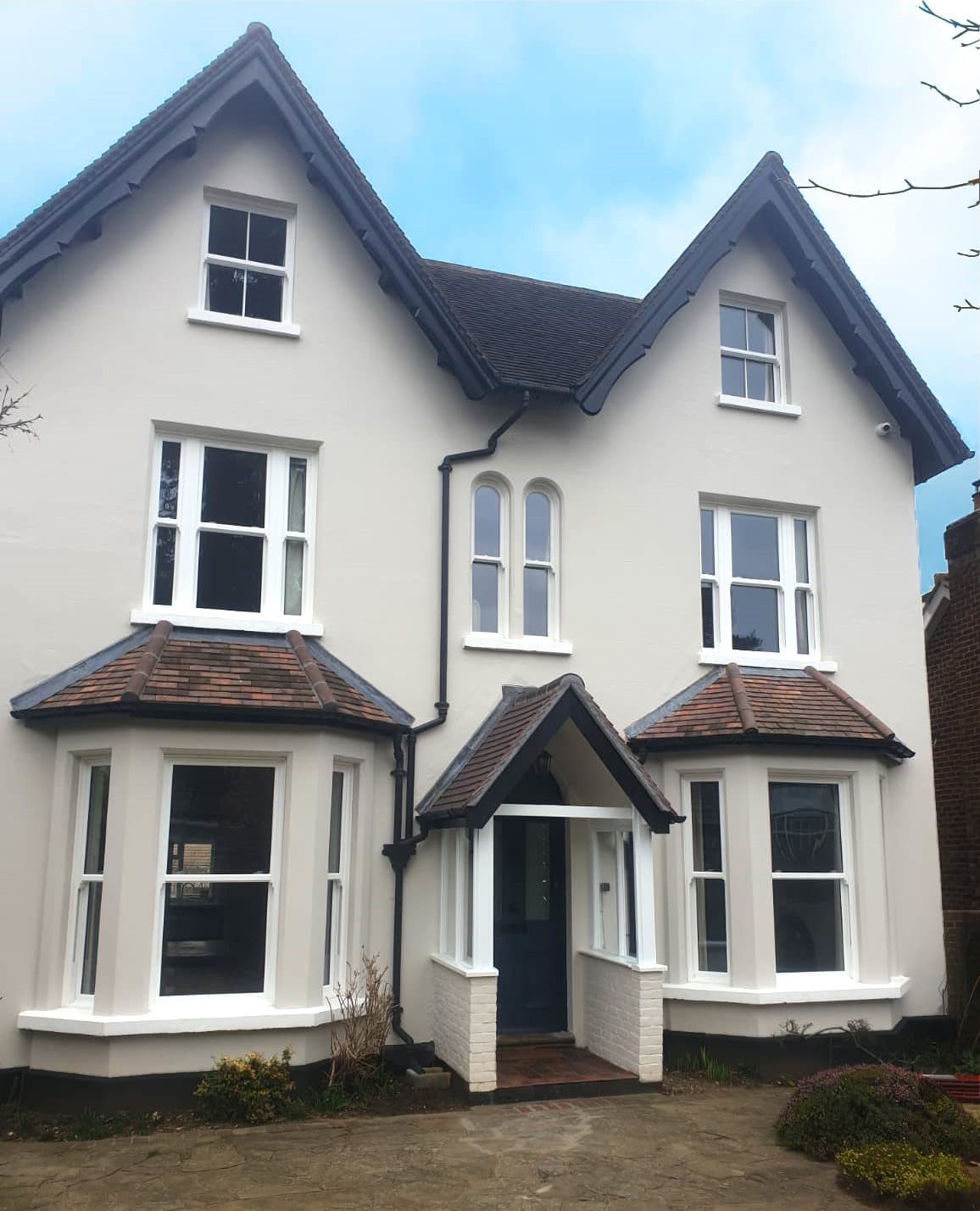
Planning permission: usually not needed
Replacing windows on a typical house is normally permitted development, which means it does not need a planning application as long as the new windows are a like-for-like replacement. Keep the same openings and a sympathetic appearance and you are generally within your rights.
There are exceptions worth checking before you order. Listed buildings need listed building consent for the work. Flats do not have the same permitted development rights that houses do. And some streets sit under an Article 4 direction that removes those rights, so a change that would normally be automatic needs permission instead. If any of those apply, the council is the place to confirm what is possible.
Building Regulations always apply
Planning permission is about how a building looks and affects its surroundings. Building Regulations are about how it performs, and they apply to a replacement window even when planning permission does not.
Three parts matter here. Approved Document L caps heat loss at a U-value of 1.4 W/m²K for a replacement window, and ours are 1.3 as standard, inside it. Where a property was built to Document Q, the security part, the window can be supplied as a Secured by Design specification to satisfy it. And Part F requires background ventilation, which the concealed trickle vents provide.
You can skip planning permission on most homes and still be bound by the Building Regulations. The two are separate, and the certificate below is how you prove the second was met.
FENSA, and why it matters when you sell
When a registered installer fits your windows, they can self-certify that the work meets the Building Regulations and register it, and a FENSA certificate is issued to you. It is the paperwork that proves the replacement was done to standard without the council needing to inspect it.
That certificate matters most when you come to sell. A conveyancing solicitor will ask for it, and not having one for windows changed since 2002 can hold up a sale or cost you an indemnity policy. We are FENSA registered, so a fitted job comes with the certificate on completion.
Fitted by us, or supplied to your fitter
On a supply and installation job across West London and the Home Counties, we survey, supply and fit, and the FENSA certificate is issued to you when the work is done.
On a supply-only order anywhere in Great Britain, the windows are made to your sizes and delivered, and your own fitter certifies the installation under their own registration. Either way the windows meet the same standard; the certificate simply follows whoever fits them.
Questions we get asked
Do I need planning permission for a like-for-like window replacement?
On most houses, no. It is normally permitted development as long as the openings stay the same and the windows suit the building. Listed buildings, flats and Article 4 areas are the exceptions to check with the council.
What is a FENSA certificate and do I need one?
It is proof that a registered installer fitted your windows to the Building Regulations and registered the work. You need it when you sell, because a solicitor will ask for it for any windows changed since 2002.
Do flats or listed buildings have different rules?
Yes. Flats do not carry the same permitted development rights as houses, and listed buildings need listed building consent. In both cases confirm with the local authority before ordering.
What happens if I have no certificate when I sell?
It can delay the sale or mean buying an indemnity policy to satisfy the buyer's solicitor. A FENSA certificate on completion avoids that, which is why a fitted job comes with one.
Read next
Talk to us about your windows
Send a photograph of the front of the property and roughly how many windows are involved, or your schedule of sizes for a supply-only order, and we will tell you what is realistic before anyone comes out.
Call 0800 861 1450, message us on WhatsApp, or email info@sashwindowfactory.co.uk.