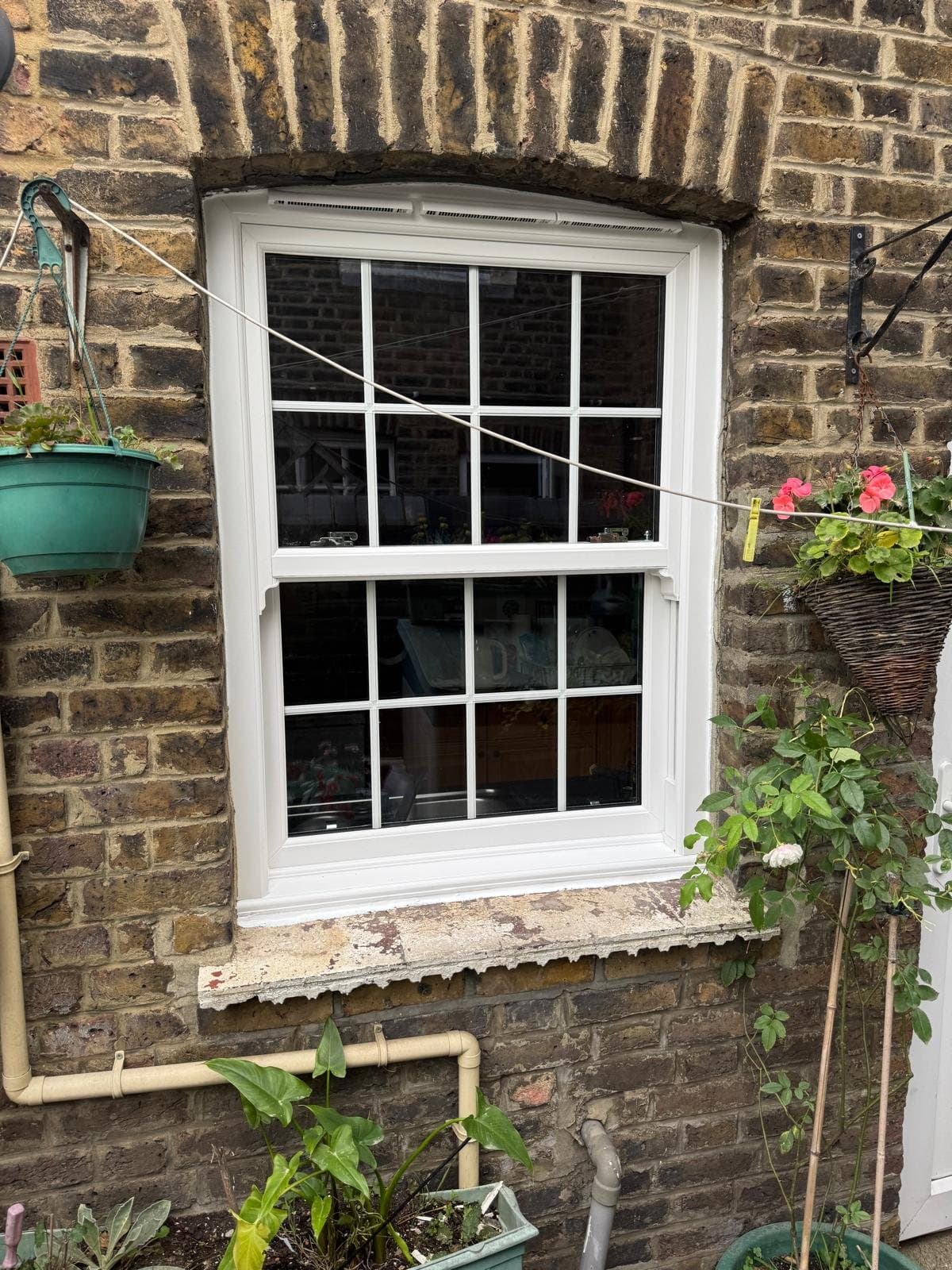
Why old sashes rattle and draught
A sliding sash works by two panels moving past each other in the frame. Over decades the timber shrinks and swells, the strips that hold the sashes in place wear, and the fit loosens. Once there is play in that fit the sash rattles in the wind and air moves freely through the gaps, which is the draught you feel and the whistle you hear.
The weakest point is usually where the two sashes pass each other and along the bottom rail, and no amount of heavy curtains fixes air moving through a join.
When draught-proofing is enough
If the frames are sound and the timber has plenty of life left, draught-proofing and an overhaul can be the right answer, and an honest surveyor will tell you when that is the case. A window that is simply tired is not the same as a window that has reached the end of its life.
The question is what is left to save. Where the timber is going, where the sashes no longer run true, or where the single glazing is the real problem, an overhaul treats the symptom and leaves the window cold.
What a modern sliding sash seals
A replacement sliding sash is built to close the paths an old one leaves open. It is made to measure to the opening so there are no packers and no gaps, the weather bar is mechanically joined into the bottom sash to push rain off the sill, and the whole window is tested rather than trusted.
The figures are the proof: air permeability at Class 4 at 600 Pa, the tightest class in the standard, water tightness at Class 7A, and wind resistance at Class C4 at 1600 Pa under BS EN 12211, equivalent to gusts of around 115mph. On an exposed or coastal elevation those numbers are the difference between a window that holds and one that whistles.
A rattle is play in the fit, and a draught is air following that play. A made-to-measure sealed sash removes both at once, which is why the noise and the cold usually go together.
How to tell which you have
Photograph the window inside and out and note whether the frames feel soft or sound, whether the sashes still run smoothly, and whether the glass is single or double. Those three tell most of the story before anyone visits.
Across West London and the Home Counties we survey the openings ourselves before anything is ordered. Anywhere else in Great Britain the windows are made to your schedule of sizes and delivered kerbside for your own fitter.
Questions we get asked
Why do my sash windows rattle and let in draughts?
The fit has loosened. Timber shrinks and the parts that hold the sashes in place wear over the years, leaving play in how the sashes sit, so they rattle in the wind and air moves through the gaps.
Can you draught-proof old sash windows instead of replacing them?
Where the frames are sound and the timber has life left, draught-proofing and an overhaul can be the right answer. It is worth having a surveyor tell you whether the window is tired or genuinely finished.
Is it better to repair or replace?
It depends what is left to save. A sound frame with a loose fit can be overhauled; a window with failing timber, sashes that no longer run true, or single glazing that is the real problem is usually better replaced.
Do new uPVC sashes seal better than old timber ones?
A made-to-measure sealed sash is tested to Class 4 air permeability and Class C4 wind resistance, so it closes the gaps an old, loose timber sash leaves open. That is where the draught and the rattle come from.
Read next
Talk to us about your windows
Send a photograph of the front of the property and roughly how many windows are involved, or your schedule of sizes for a supply-only order, and we will tell you what is realistic before anyone comes out.
Call 0800 861 1450, message us on WhatsApp, or email info@sashwindowfactory.co.uk.